
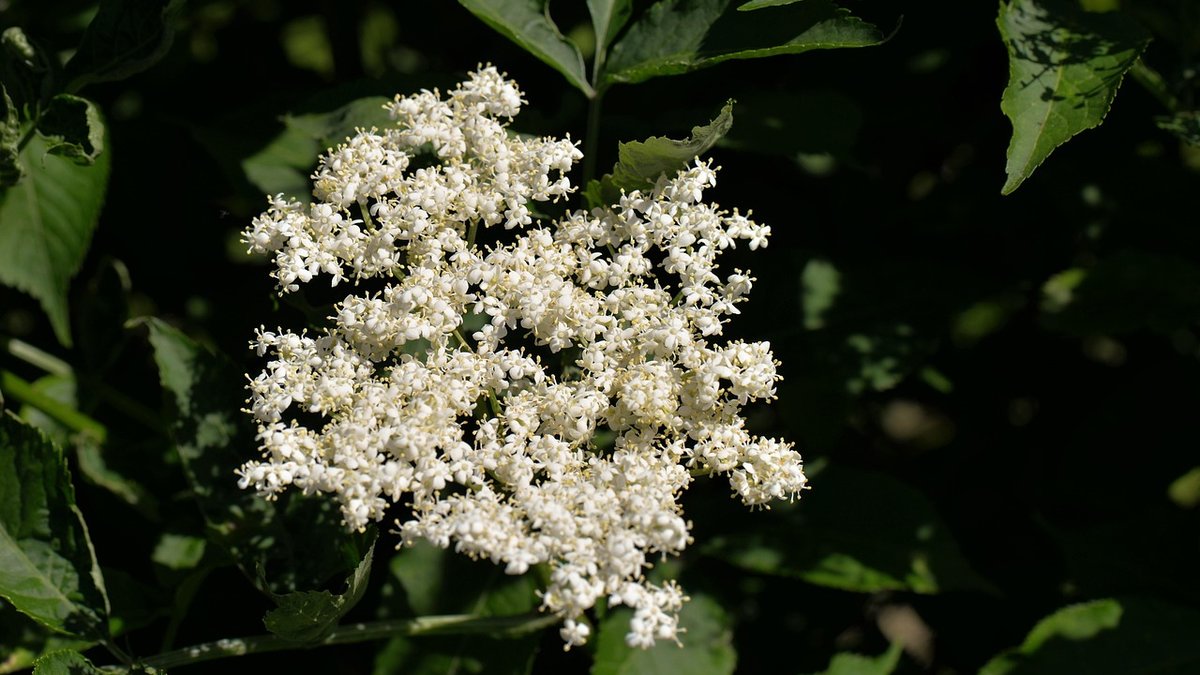
Elder is one of the most generous trees in the British hedgerow, giving twice in a single year. In late May it hands over frothy cream elderflowers for cordial and fritters; by September the same bushes hang heavy with small, wine-black berries. For generations of households, a bottle of spiced elderberry syrup made in early autumn has been as much a part of winter as woolly hats and hot water bottles.
Elderberries are tart and a little wild-tasting on their own, which is exactly why they take so kindly to spice, honey and a long, slow simmer. What you end up with is a deep, glossy syrup that tastes like hedgerow medicine — dark, warming and slightly mysterious — and it keeps beautifully on a cool shelf or in the fridge, ready for the first sniffle of the season.
Elder (Sambucus nigra) grows almost everywhere in the UK: hedgerows, railway embankments, allotment edges, scrubby ground behind car parks. The berries ripen from late August into October, depending on where you are, and a good bush can yield several kilos.
Look for:
Two warnings worth taking seriously. First, elderberries should never be eaten raw — they contain cyanogenic glycosides, which are destroyed by cooking. The same goes for the leaves, bark, roots and stems, which are toxic. Unripe green berries and the green stalks carry the highest levels, so strip carefully.
Second, don't confuse our native elder with dwarf elder (Sambucus ebulus), which holds its berries upright rather than drooping and smells unpleasant, or with red-berried elder, whose berries are red and held in upright cones. If in doubt, walk on. And always avoid bushes beside busy roads or that may have been sprayed — pick above dog height and give everything a good rinse.
Take a fork and a basket, and comb the berries from the heads straight into your container. This is far quicker than picking by hand and leaves most of the stalks behind. Pick only fully ripe, purple-black berries; discard anything green, and don't fret over the odd tiny stem.
Freeze the berries overnight if you can. The ice crystals break down the cell walls, so you get more juice for your effort, and freezing also softens the berries so they mash easily.
This makes roughly 500–600ml of finished syrup. Scale it up if you have a glut, but cook in batches rather than crowding one enormous pan.
Tip the berries, water, spices and orange into a heavy saucepan. Bring to a gentle simmer, cover, and cook for 20–25 minutes, stirring now and then, until the berries have collapsed and the liquid is dark and syrupy. Take it off the heat, cool for ten minutes, then mash thoroughly with a potato masher.
Strain through a muslin-lined sieve set over a bowl, and leave it to drip for a few hours — or overnight in the fridge. Don't squeeze too hard or you'll cloud the syrup with sediment. Measure the strained liquid.
Now warm it very gently to blood temperature — no hotter — and whisk in the honey until fully dissolved. Never boil the honey, as you'll lose much of what makes it worth using. For a vegan version, or if you're making this for a baby over one year, use an equal volume of sugar instead and stir over a low heat until dissolved.
Pour into sterilised bottles, label with the date, and store in the fridge, where it will keep for two to three months. For longer storage, freeze the syrup in ice-cube trays and defrost as needed.
A teaspoon (5ml) a day is the traditional daily tonic, or up to three or four teaspoons spread through the day at the first hint of a scratchy throat. Stir it into hot water with a squeeze of lemon for a soothing drink, drizzle it over porridge or yoghurt, or add a spoonful to a mug of ginger tea. Children over twelve months can take half the adult amount — but never give honey to a baby under one year old.
Elderberry syrup is a lovely, warming home remedy, not a substitute for medical care. If you're pregnant, breastfeeding, on prescribed medication or dealing with a stubborn or worsening illness, speak to your GP or pharmacist first. Keep the bottle clearly labelled, out of reach of small hands, and trust your instincts if something doesn't smell or taste right.
A few bottles of your own syrup on the shelf is one of the small, satisfying rituals of a British autumn. Pick only from abundant bushes, leave at least half the berries for the birds and for next year's flowers, and never strip a hedgerow bare. Wash your hands, keep your equipment scrupulously clean, and enjoy the quiet pleasure of turning a scruffy wayside shrub into something that will see you kindly through to spring.

Hi, my name is Anthony kuber. I am artist and fashion designer.
I love to travel and writing blogging.
Your email address will not be published. Required fields are marked *
Software Developer & Writer
Hey, I'm Diva, a developer and writer blending code and creativity. I'm driven by a deep curiosity and a relentless pursuit of excellence. Join me as I craft digital solutions and captivating stories.


