
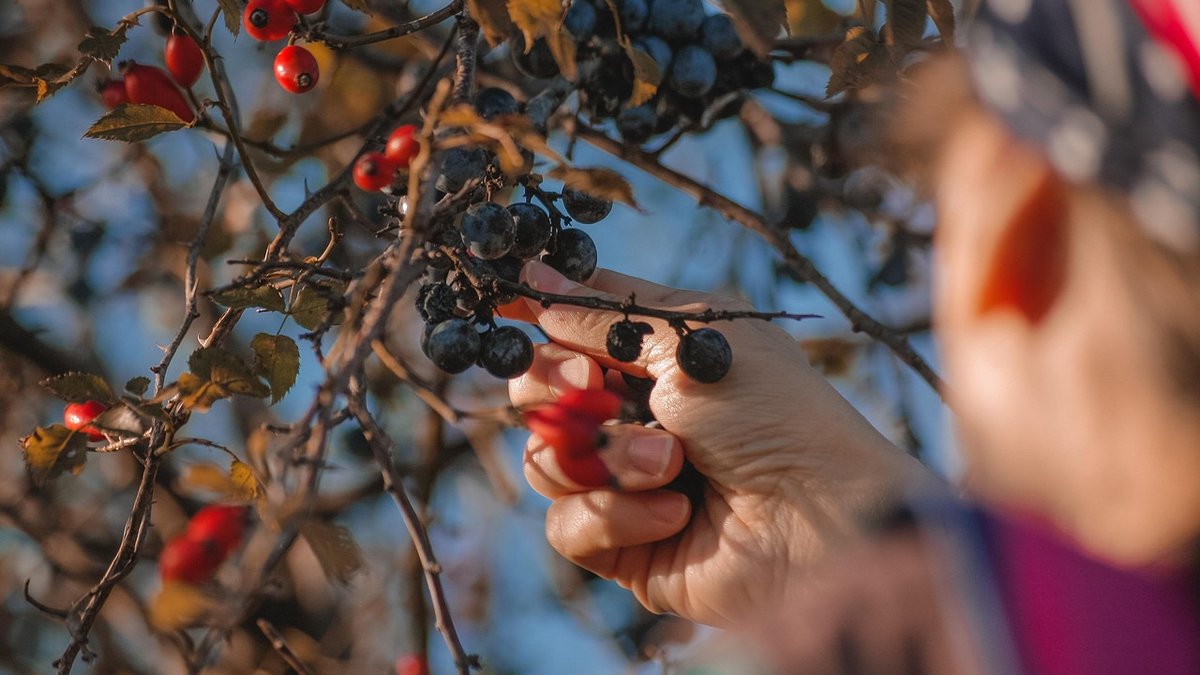
A British hedgerow is one of the most generous free larders in the country. In a single afternoon in late September you can walk a lane and come home with blackberries, elderberries, sloes, haws and a pocketful of rosehips. Once you know six or seven common species well, you have a skill for life that costs nothing and improves every year. The trick is not to learn everything at once — start with the berries that are easy to recognise and hard to confuse, then build outwards.
Foraging is safe when it is cautious. These are the habits worth keeping from your very first walk.
Blackberry (bramble). Ripe from August into October, it is a cluster of tiny drupelets that comes away from the white core with a gentle pull. If it fights back and stays dull red, it is not ready. Pick only the ones that fall into your hand.
Elderberry. Look for flat sprays of tiny purple-black berries on drooping, pink-stained stems, usually along a sunny woodland edge from late August. The leaves are pinnate and smell slightly rank when crushed. Never eat elderberries raw — they must be cooked. Strip them from the stems with a fork; the stems and leaves do not belong in the pot.
Rowan (mountain ash). Bright orange-red berries in dense flat clusters, on a slim tree with grey bark and feathery ash-like leaves, from September. Sharp and bitter raw, they make a lovely jelly.
Sloe. The fruit of blackthorn: blue-black with a heavy dusty bloom, hanging singly on brutally thorny twigs that are usually bare by the time they ripen. Inside is a single stone. They are unbearably astringent raw, but after the first frost — or a night in the freezer — they make sloe gin, jelly and a deeply flavoured syrup.
Hawthorn. Deep crimson haws about the size of a small pea, each with one stone and dryish, mealy flesh, clustering among lobed leaves on a thorny hedge. This is the same bush that flowered white in May. Good in ketchups, fruit leathers and hedgerow jellies; a little goes a long way.
Rosehip. Oval, orange-red and glossy, tipped with a small tuft of dried sepals, on the wild dog rose. They ripen from late September and hold on the bush well into winter. High in vitamin C, but avoid the tiny hairs inside, which irritate the throat, and never eat the seeds raw. Syrup and jelly are the classics.
Most hedgerow poisonings come from a handful of plants, so learn these well.
Hedgerow berries run roughly from late July to the first hard frosts. Blackberries and elderberries come first, then rowan, haws and rosehips, with sloes last — often after Christmas if the frosts are late. Take a shallow basket or rigid tub rather than a bag, so soft fruit does not crush, plus secateurs for tough rosehip stems and gloves for thorny hedges. Wear long sleeves and check yourself for ticks afterwards.
And remember the hedge itself. Hedgerow cutting is legally restricted between 1 March and 31 August in England, and any hedge may be somebody's boundary. Pick from the field side where you can, never from a nature reserve without permission, and leave the out-of-reach berries at the top for the birds. Forage lightly, learn one new species each season, and the hedgerow will quietly feed you for decades.

Hi, my name is Anthony kuber. I am artist and fashion designer.
I love to travel and writing blogging.
Your email address will not be published. Required fields are marked *
Software Developer & Writer
Hey, I'm Diva, a developer and writer blending code and creativity. I'm driven by a deep curiosity and a relentless pursuit of excellence. Join me as I craft digital solutions and captivating stories.


