
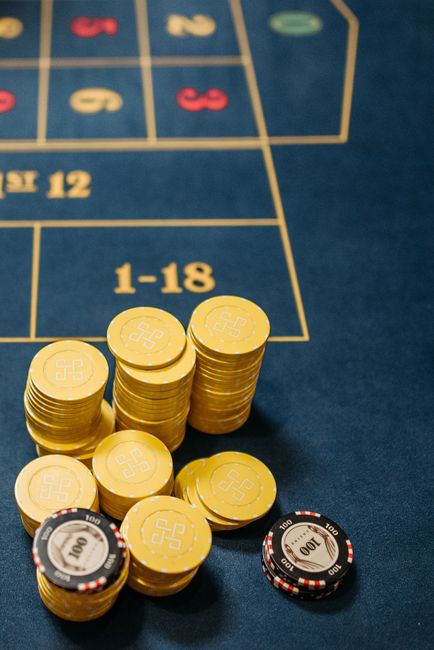
Most people lose money at online casinos for a boring reason: they treat every game the same. They jump from a slot machine to a poker table to a live roulette wheel as if the underlying math were identical. It isn't. Slots, poker, and sports betting are three different ecosystems with three different risk profiles, and the players who actually survive long-term are the ones who understand the difference. Let's break down what's really going on under the hood.
Slot machines are not “due” to pay out. They don't remember your last spin. Every spin on a modern video slot is an independent event driven by a random number generator, and the only number that matters over time is the return-to-player (RTP) percentage baked into the game's math model. A 96% RTP slot will, on average, return $96 for every $100 wagered — but that average only emerges over millions of spins. In a single session, variance rules everything.
Here's where players get hurt: they pick games by theme, not by structure. A slot with high volatility might pay 10,000x your stake but go 400 spins without a meaningful win. A low-volatility slot pays small and often. Neither is “better” — it depends on your bankroll and patience. If you're playing with $50, a high-volatility game will likely eat you alive before you hit anything. Match volatility to your budget, not your mood.
A few concrete things worth doing:
Poker is the one category where a skilled player can have a genuine long-term edge. That's not marketing fluff — it's math. In cash games, you're not playing against the house; you're playing against other humans, and the house takes a small rake. If you're better than the field, you profit.
But “better than the field” is a high bar online. The modern micro-stakes pool is full of solvers, tracking software, and players who have studied ranges for thousands of hours. If you sit down at $0.05/$0.10 No-Limit Hold'em thinking you'll crush it because you win at your local pub game, you'll be humbled fast. A detailed guide is available at 999bett.in.net.
Where beginners genuinely have room to grow:
If poker feels too grindy, that's because it is. There's no shortcut. Anyone selling you a “system” to beat online poker in a week is selling you a fantasy.
Here's a stat most casual bettors ignore: the difference between a 4.5% and a 5.5% vig on a hundred bets is the difference between a slim profit and a steady loss. The margin is that thin. Sharp bettors obsess over line shopping — having accounts at multiple sportsbooks and always taking the best price on the same market.
If Team A is -110 at one book and -105 at another, and you bet 100 such wagers a year at $100 each, that five-cent difference saves you roughly $250 in expected value. Over a decade, that's thousands of dollars for basically zero extra effort.
A few practical habits sharp bettors share:
No single tip in this article matters as much as bankroll management. You can play perfect poker, hit high-RTP slots, and shop lines like a pro, and still go broke if you're betting 10% of your roll per event. Variance is not a rumor — it's a mathematical certainty, and it will find you eventually.
Percentage-based staking changes your entire relationship with the games. Betting 1–2% of your bankroll per wager means a brutal losing streak stings but doesn't end you. It also means a heater compounds instead of vaporizing.
Some rough frameworks worth considering:
Every game in iGaming has a house edge. Slots, blackjack, roulette, poker rake, sportsbook vig — it's all there, and it's how these businesses stay in business. What separates a smart player from a fish is recognizing where the edges are small enough to overcome with skill, where they're fixed and unavoidable, and how to manage variance so it doesn't bankrupt you before the math plays out.
The honest truth is that most players will lose over their lifetime. That's not a moral failure; it's the structure of the industry. The best you can do is play games where your decisions actually matter, track your results with some discipline, and treat the money you wager as money you've already spent. If you can do that, iGaming is genuinely entertaining. If you can't, no slot, strategy, or tip sheet is going to save you.
Pick your games. Know your numbers. Set your limits. Everything after that is just variance.

Hi, my name is Anthony kuber. I am artist and fashion designer.
I love to travel and writing blogging.
Your email address will not be published. Required fields are marked *
Software Developer & Writer
Hey, I'm Diva, a developer and writer blending code and creativity. I'm driven by a deep curiosity and a relentless pursuit of excellence. Join me as I craft digital solutions and captivating stories.


